Vulnerability made visible

Launching a world-leading PQC platform

  • Brand strategy
  • Digital design
  • Naming
  • Verbal identity
  • Visual identity

Risk revealed

The client: Quantumfy

You’ve probably never heard of Q-Day, or quantum computing – but hackers all over the world have. The world is getting to a stage where quantum computing, capable of cracking our current standards of encryption, will finally be viable technology. And when it is, lots of companies may struggle to keep sensitive data out of the hands of the bad guys.

That’s where Quantumfy comes in – Europe’s first post-quantum cryptography discovery platform.

The Moment of Change: Changing the game

Quantumfy is a post-quantum cryptography discovery platform that tracks what encryption your online channels use, lets you know if it could be cracked by quantum computing, and gives you advice on what to do next. Currently, there’s very little out there on PQC – the NCSC have got guidelines, but very few companies have created a tool like Quantumfy, or with the same level of depth.

The idea came from cybersecurity expert Lee Hibbert and SIDEKICK Venture Studio, who trusted us to make sure their very first portco would hit the market with a bang.

Putting strategy to work

When we were first told about the platform, we saw a pre-alpha build and an idea that was effectively sketched on the back of a napkin. We were given 100 days to get it to market and help it become commercially viable.

To start with, there was no name, no look and feel, no positioning – the perfect blank canvas for us to get stuck into.

Seeing as ‘Q-Day’, the day that quantum computing becomes reality, is a pretty well-known term in the industry, we decided our name had to have a Q in it, or some reference to quantum, to set the expectation. After developing a bunch of options, we settled on Quantumfy – a portmanteau of Quantum and quantify – to show how the platform determines your risk and exposure to post-quantum problems.

Our positioning and tone of voice came from a place of urgency – people need to know their risk now before it becomes too late. And essentially, the platform is a SaaS product, so we needed to be able to talk like a SaaS company, in ways that CISOs would understand when buying the product.

However, the product also needed to be board-friendly, so we went for a straight-forward, no-nonsense approach that conveys the risk but also, the knowledge and security that Quantumfy will help you get prepared.

Getting the brand to market

Our logo takes 0 and I, the basis of all computing in binary, combines them with a roundel and turns them into a Q to create a modern and timeless marque, along with soft serifs that flow beautifully.

All tech guys love ‘dark mode’ so our brand had to work with a platform that would most likely be viewed in dark mode 90% of the time. That’s why our colour palette includes a fiery orange, pastel pinks, yellows and blues, and an almost-black grey that would stand out off the screen.

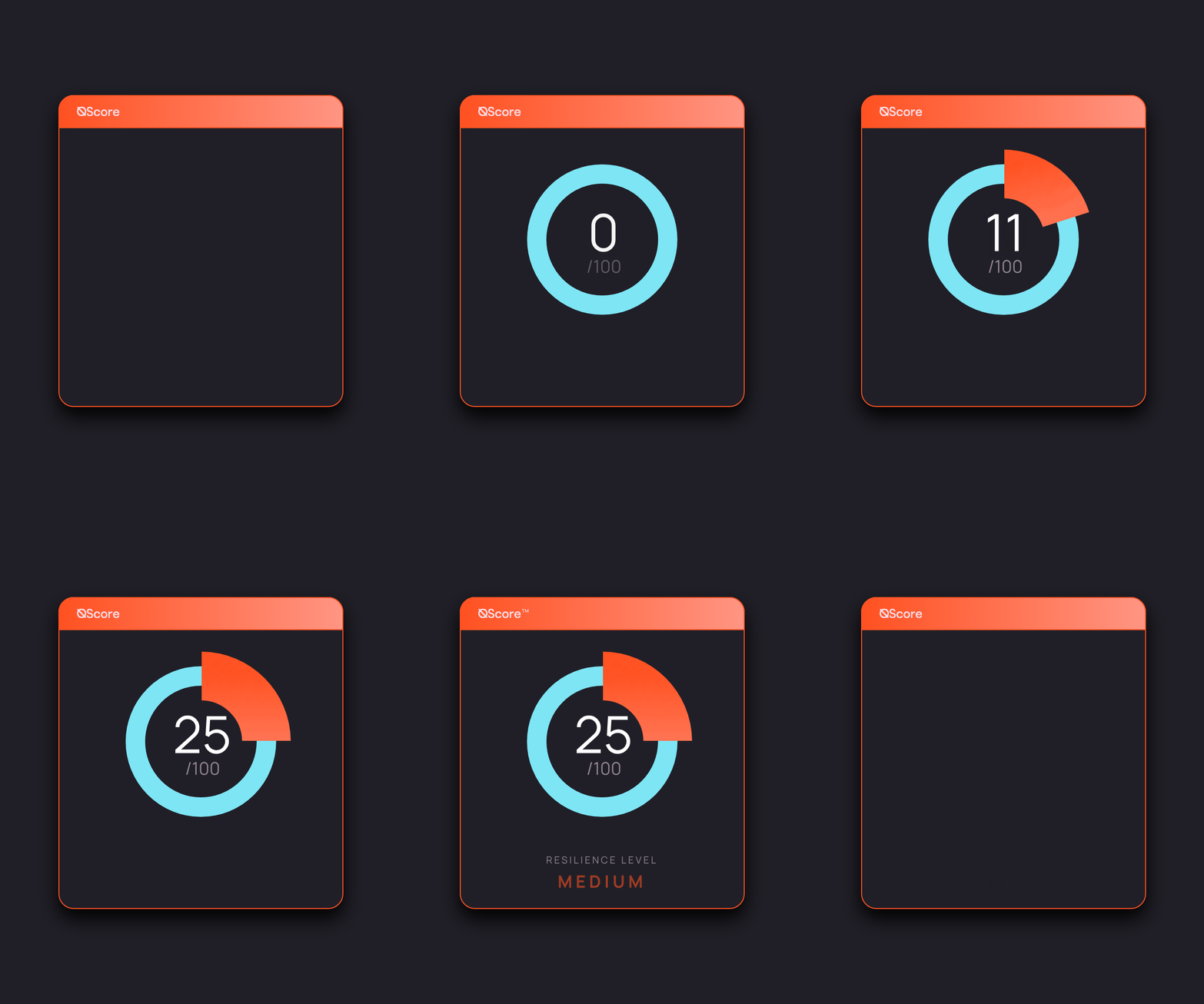
When the logo was ready, we were immediately drafted in to design the look and feel of the platform’s dashboard and define what Quantumfy would look like to enterprise organisations around the world. We dove right into the platform and wireframed out the user experience from scratch, making sure that the board-friendly elements would lead, followed by the deep technical insight. Throughout the build, we continued to test and tweak so that when it launched, it would look more Series A than MVP.

The brand also had to come to life across sales decks, one-pagers, and a website. The portco would be launching with a brochure site, so we created a WordPress site with a simple blog that would show off the platform and all its capabilities without giving too much away. We added subtle animation across headers and product showcases, as well as pop-up forms for data capture that didn’t interrupt the site experience.

The Mighty change

Having just launched at Infosecurity Europe, Quantumfy is on track to become one of the cyber industry’s most useful tools, with interest from huge companies across the globe in sectors such as finance, defence and telecoms.